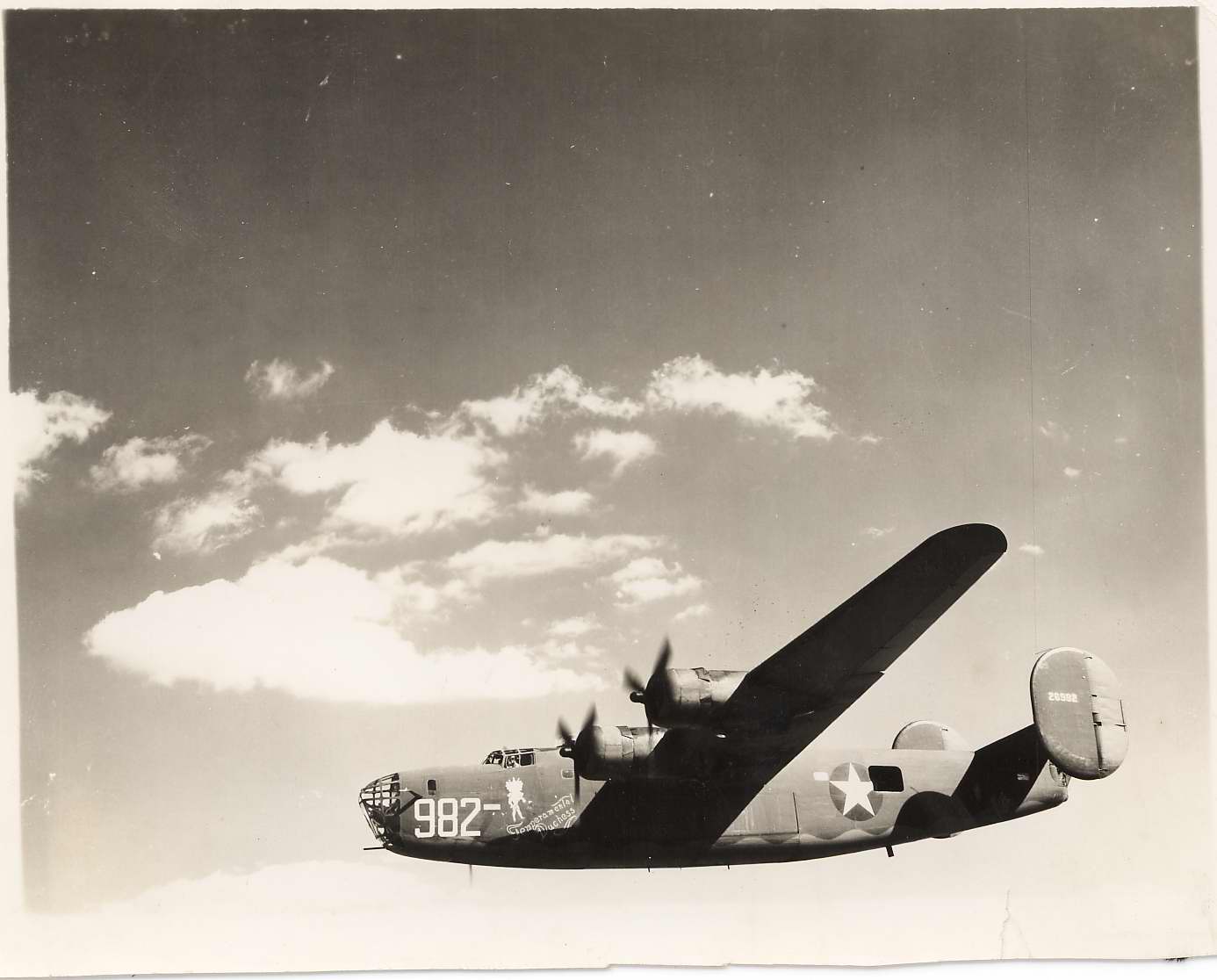
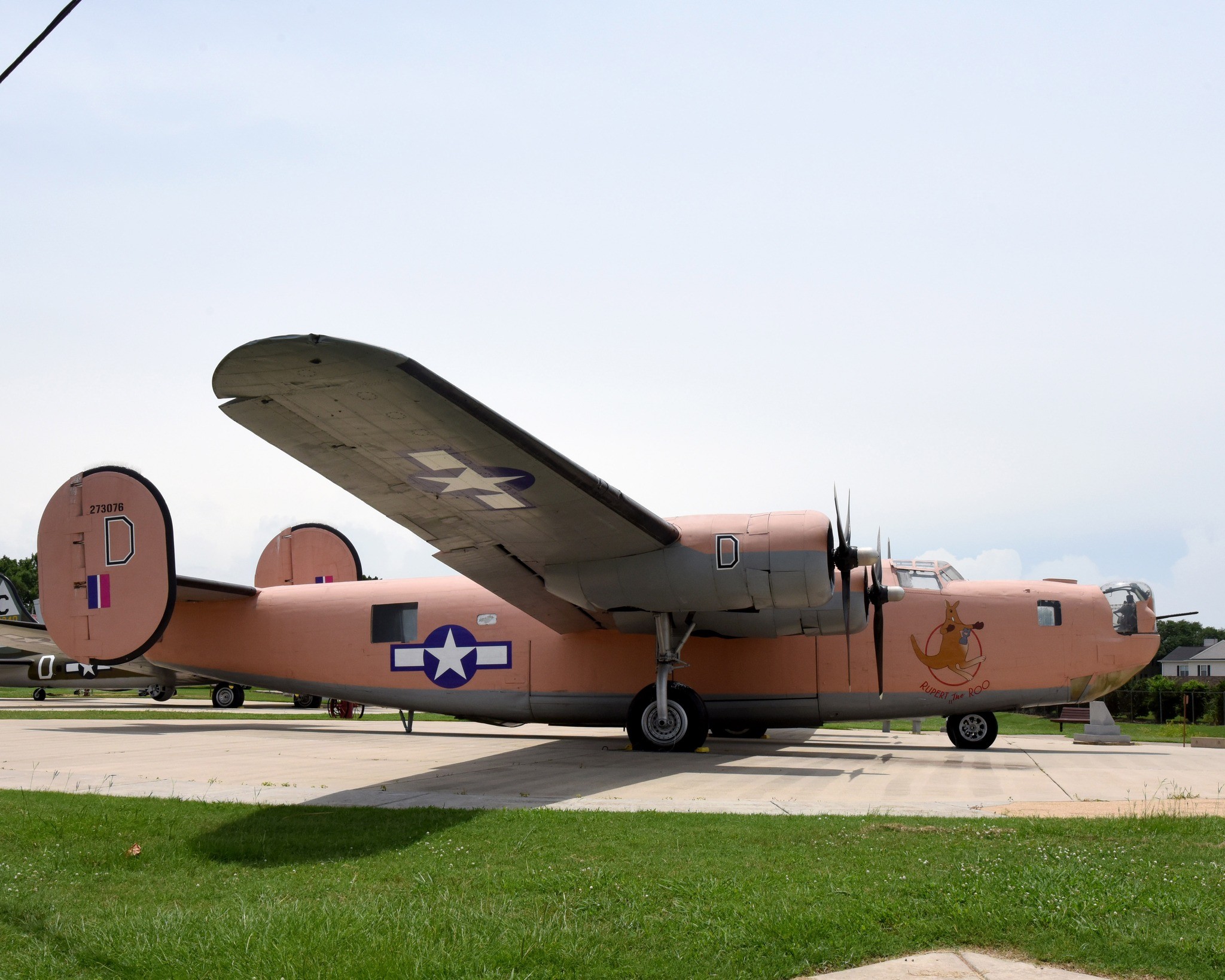
The National Museum of the Mighty Eighth Air Force is honored to become the home of Consolidated B-24J-20-FO Liberator, USAAF Serial No. 44-487821, on loan from the National Museum of the United States Air Force. As one of only a handful of surviving Liberators and one of just three B-24’s in the National Museum of the U.S. Air Force’s collection, the aircraft represents an important opportunity to preserve and interpret the history of the airmen who flew with the Eighth Air Force’s Second Air Division.
Like many surviving World War II aircraft, 44-487821 has experienced a remarkable journey. Following the war, it was transferred to the Spartan School of Aeronautics in Tulsa, Oklahoma, where it remained exposed to the elements for decades before being relocated to Barksdale Air Force Base in 1978. Over the years, dedicated volunteers worked to stabilize and preserve the airframe, which appeared in several paint schemes, including Laiden Maiden, Louisiana Belle II, and, most recently, Rupert the Roo II, ensuring the Liberator remained visible to generations of visitors. Each name reflected an effort to keep the aircraft visible, remembered, and preserved for future generations.
Aircraft at a Glance
Aircraft: Consolidated B-24J-20-FO Liberator
Serial Number: 44-487821
Manufacturer: Ford Motor Company
Plant: Willow Run, Michigan
Loaned By: National Museum of the United States Air Force
Previous Location: Barksdale Air Force Base, Louisiana
Status: Restoration and relocation in progress
Anticipated Arrival: Early spring 2027 (subject to change)
Project Updates
Updated: September 2026
Completed
August 2026 | Phase II Complete
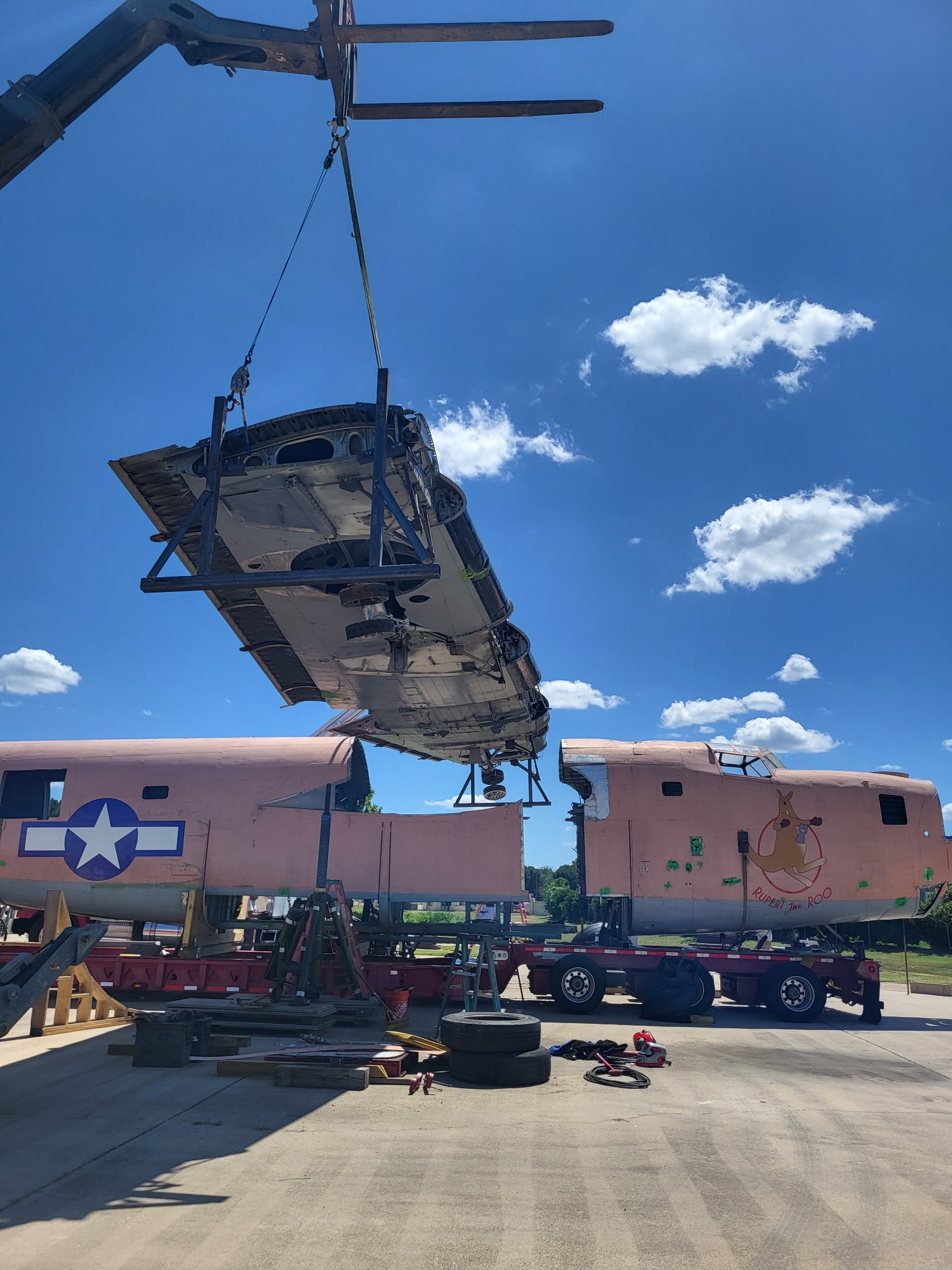
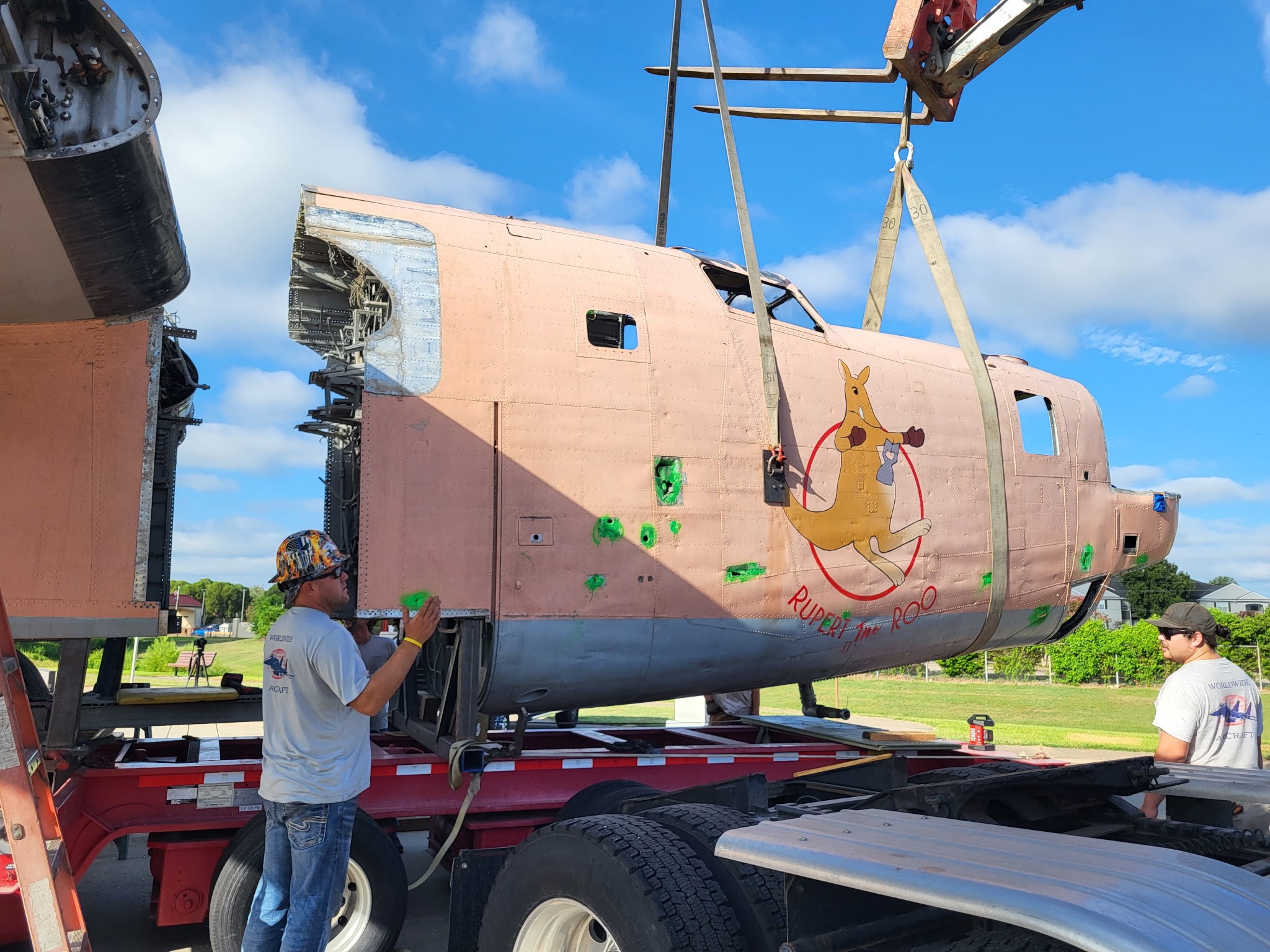
Main wing assembly being lifted off the fuselage.
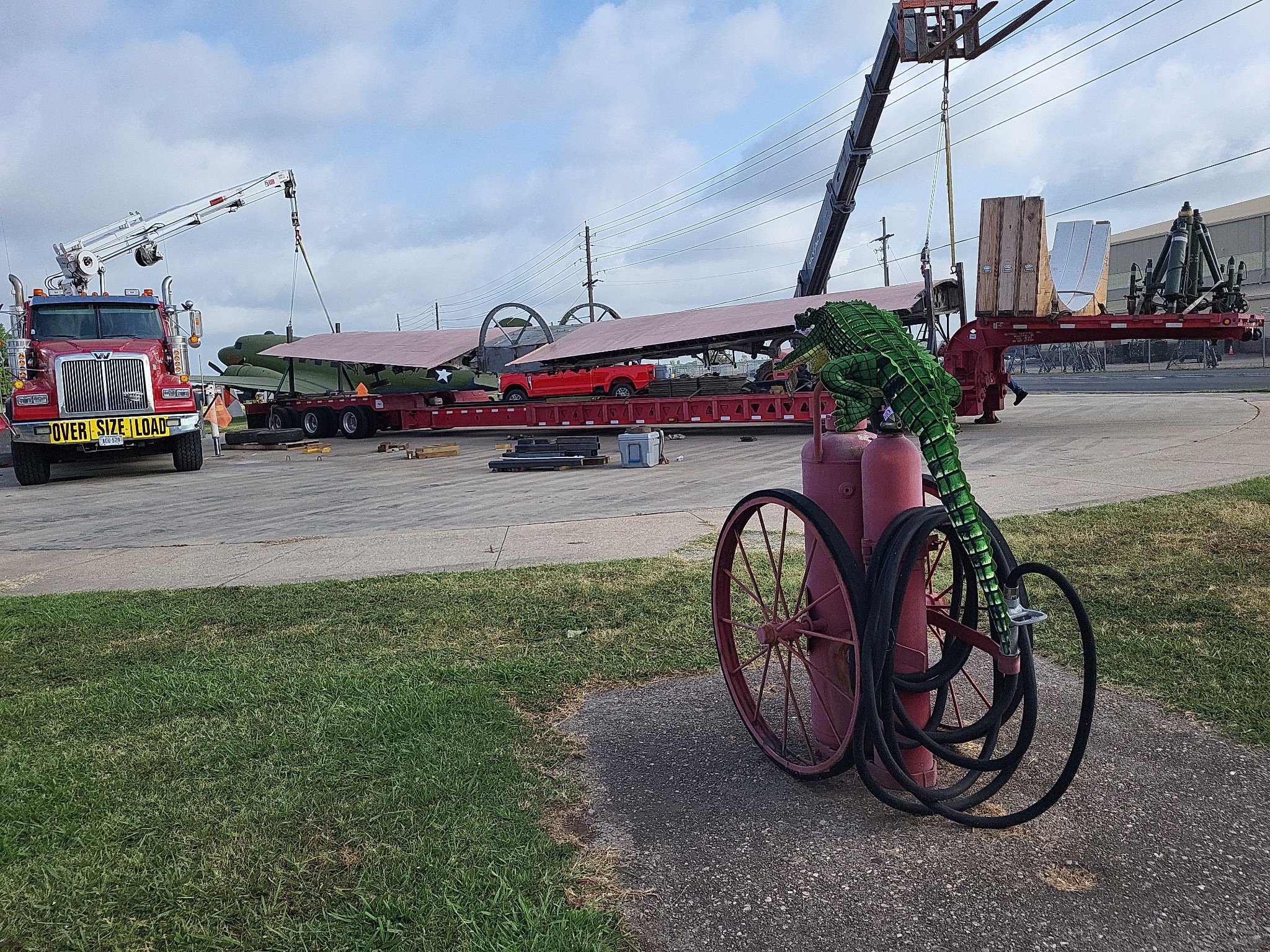
The aircraft’s main wing assembly has been successfully separated from the fuselage, marking another major step in preparing the Liberator.
Following removal, the wing assembly and other components were transported off Barksdale Air Force Base to offsite locations, where painting and restoration work will take place.
May 2026 | Phase I Complete
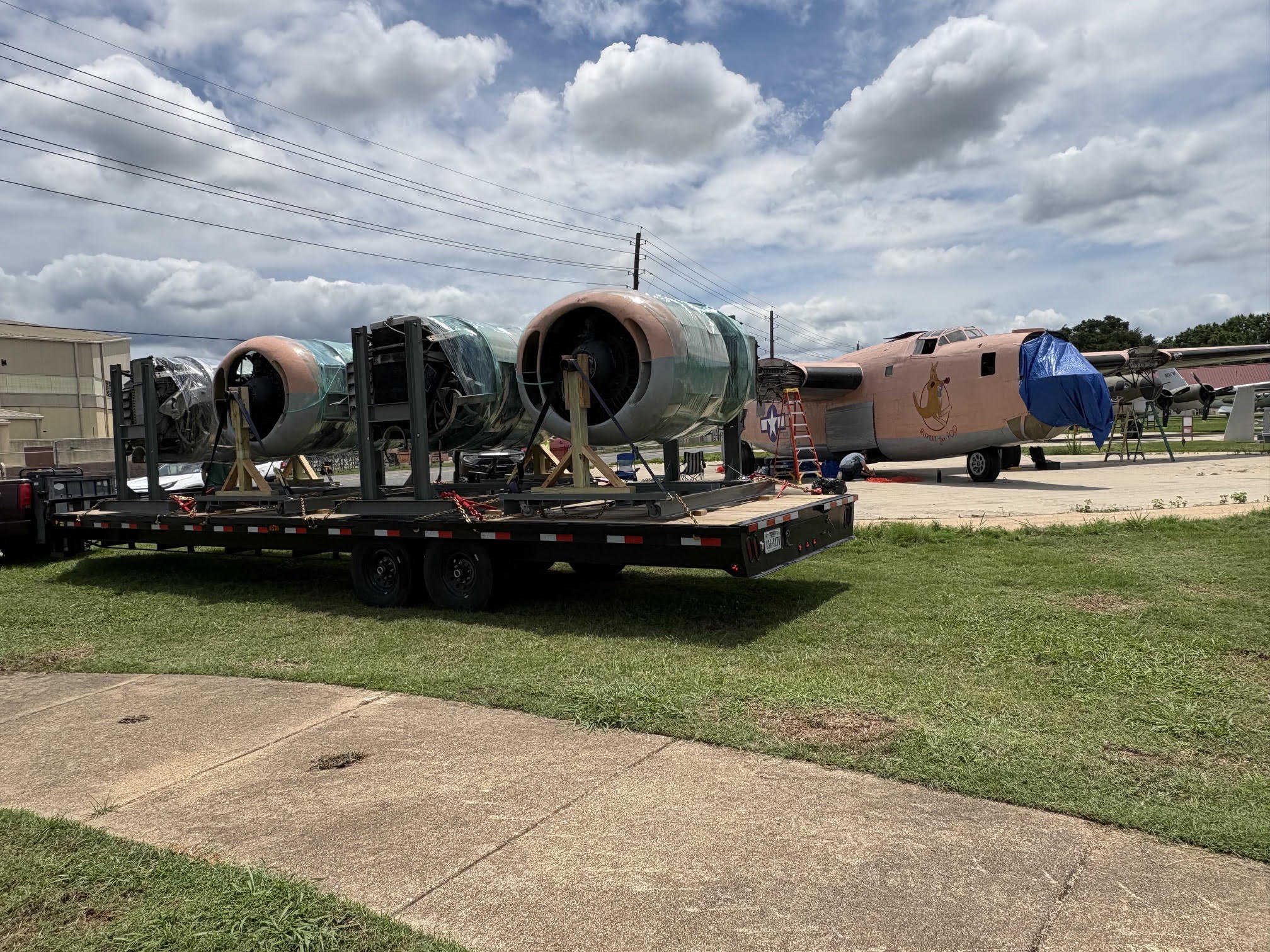
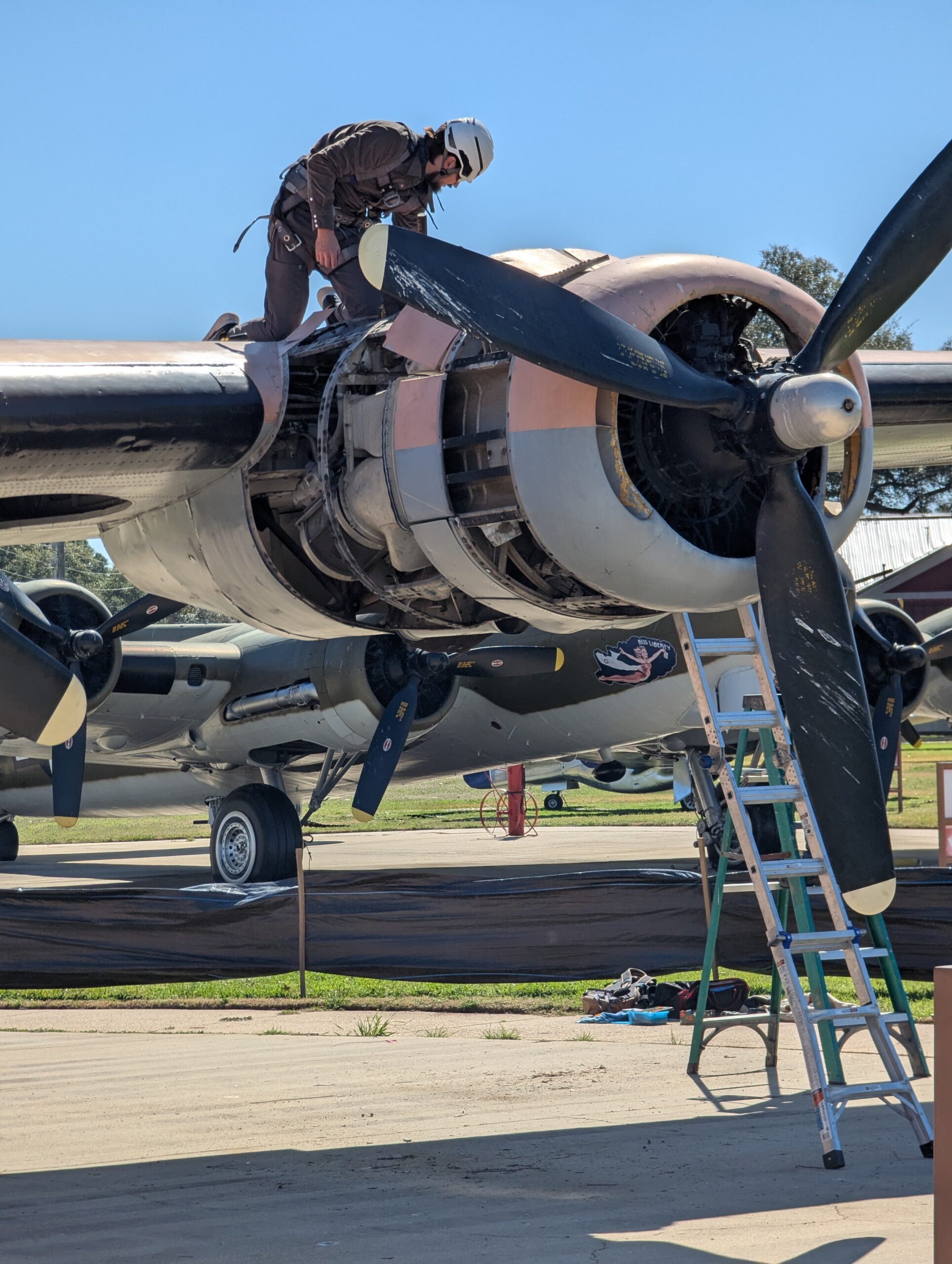
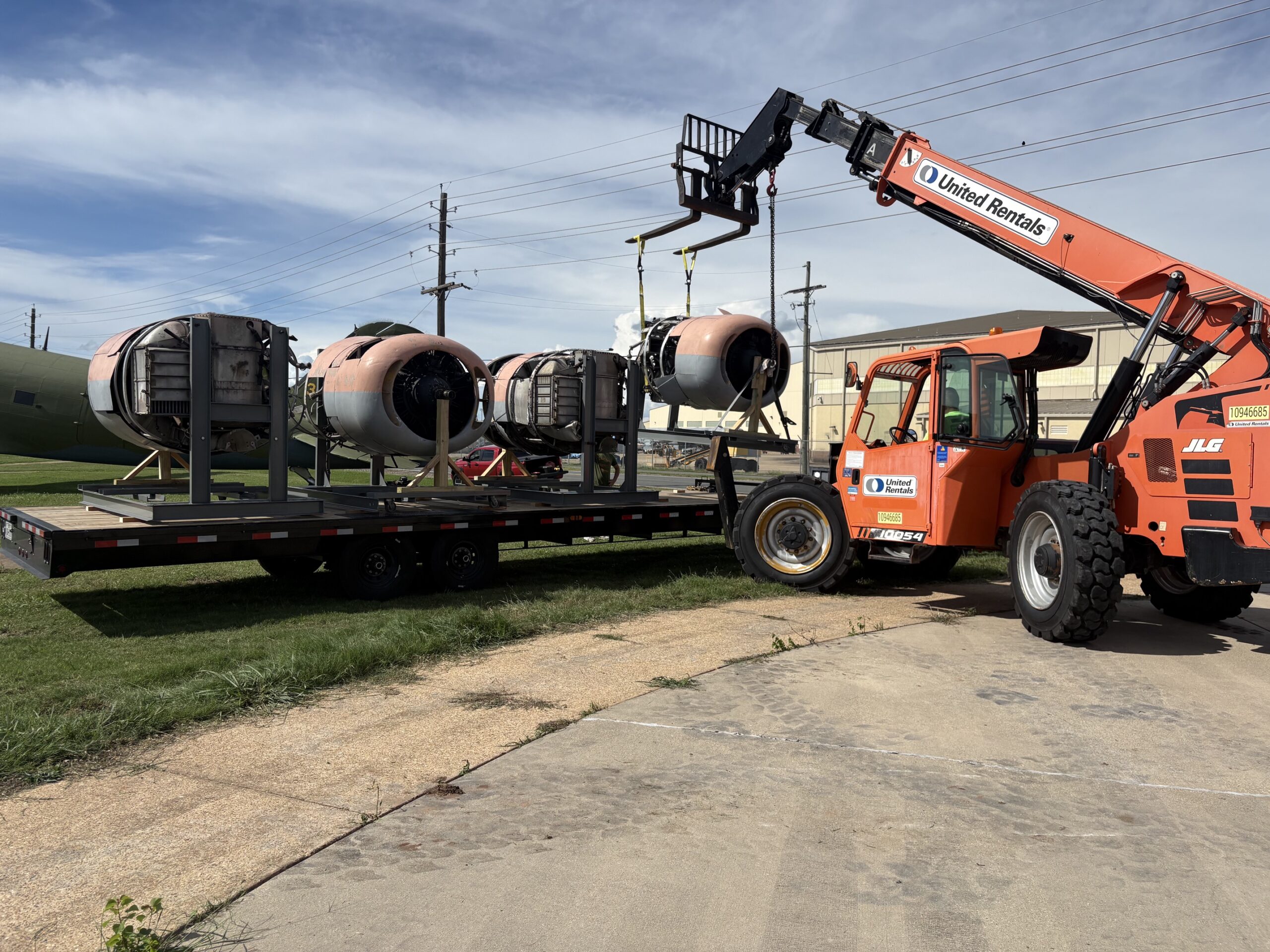
Engines prepared for transport to restoration facility.
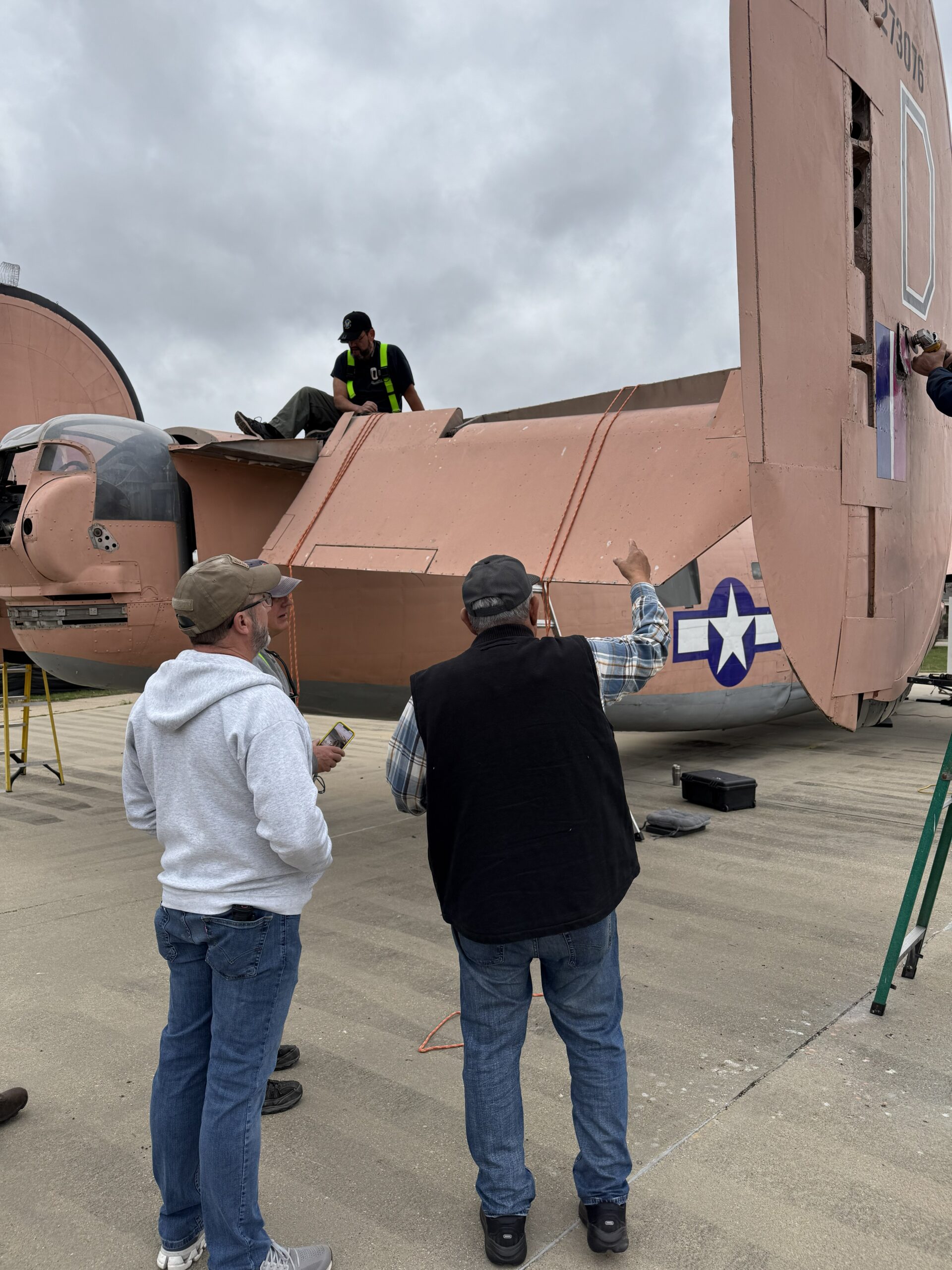
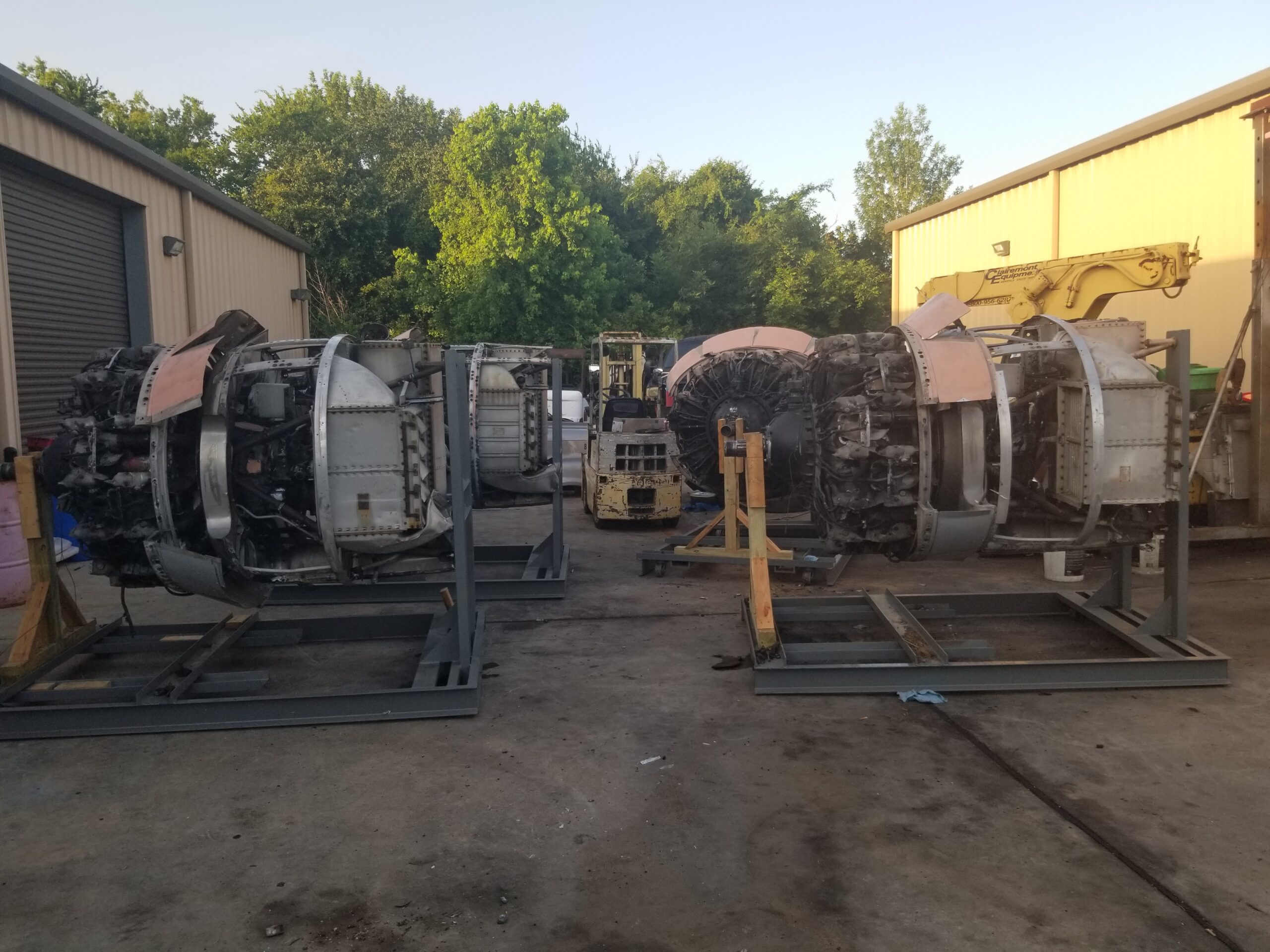
The aircraft’s ailerons, flaps, horizontal stabilizers, turrets, propeller assemblies, and all four engines were cataloged and removed for transport and restoration. The completion of Phase I marked the project’s first major milestone.
February 2026 | Restoration & Removal Began
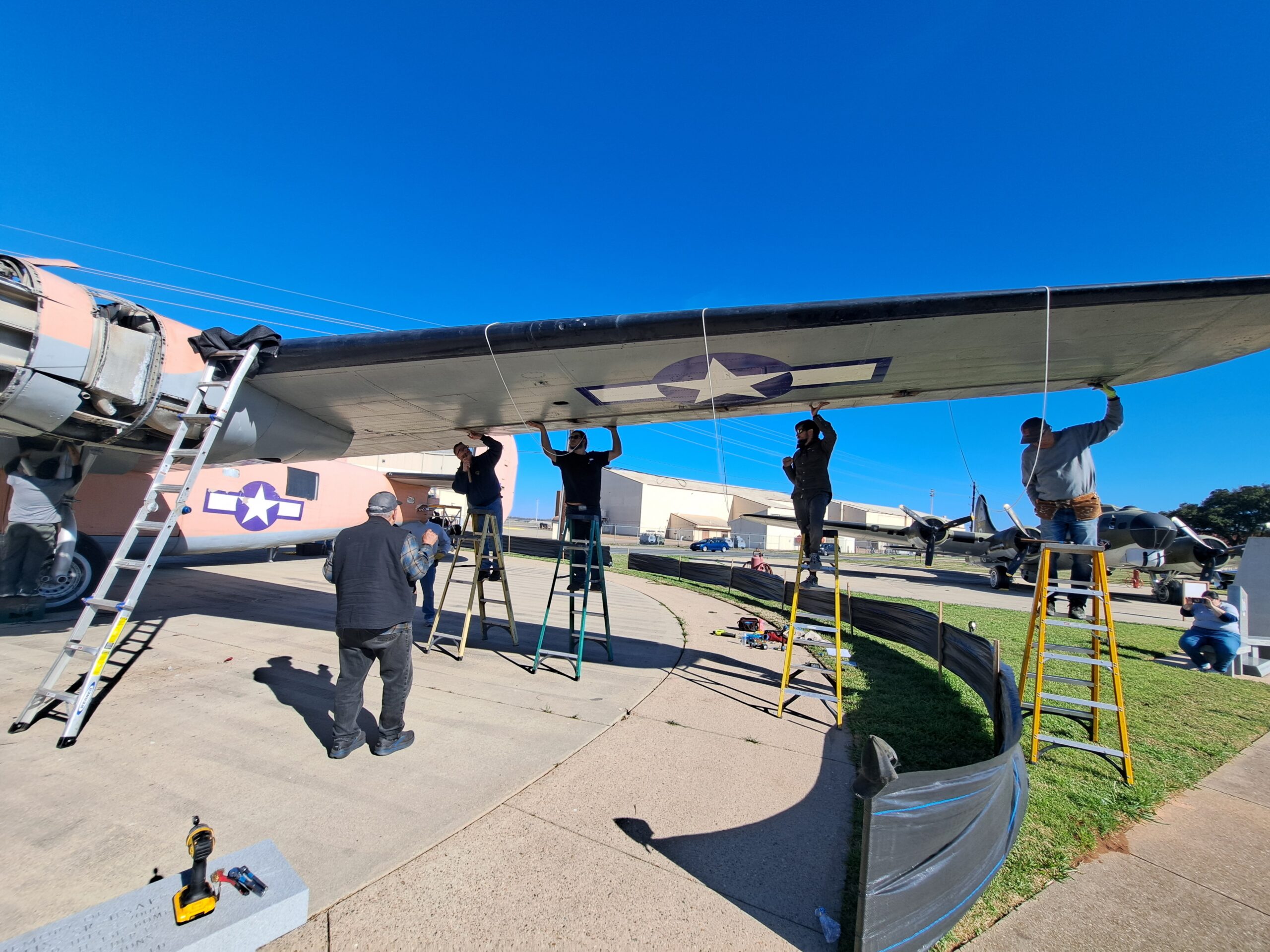
Museum staff and volunteers traveled to Barksdale Air Force Base to begin the first phase of the restoration project. Working alongside project partners, the team documented the aircraft and began the careful disassembly process.
June 2025 | The Journey Began
The National Museum of the Mighty Eighth Air Force and Barksdale Air Force Base announced plans for the museum to become the future home of Consolidated B-24J-20-FO Liberator, USAAF Serial No. 44-487821, on loan from the National Museum of the United States Air Force.
In Progress
Paint & Restoration
With the major components now removed from Barksdale Air Force Base, work has shifted to the next stage of the project. The B-24’s fuselage, main wing assembly, and other components are undergoing painting and restoration at offsite locations.
This phase will prepare the aircraft for its eventual transportation to Savannah and installation at the National Museum of the Mighty Eighth Air Force. As work progresses, additional updates and behind-the-scenes photographs will be added to this page. Museum staff continues to document and preserve the aircraft at each stage of the process.
Videography Credits: LandLocked Aviation Services, National Museum of the Mighty Eighth Air Force, National Museum of the United States Air Force, and additional contributors. Images remain the property of their respective owners and are used with permission and credit where applicable.
Looking Ahead
Continued restoration and conservation
Arrival at the National Museum of the Mighty Eighth Air Force
Installation within the museum’s expanded galleries
Public exhibition
Arrival at the Museum
Projected: Early Spring 2027
The B-24 is expected to arrive at the museum in early spring 2027.
Additional time will be required to prepare the aircraft for public exhibition.
B-24 Project Gallery
Follow the Liberator’s journey through photographs from various stages of the project.
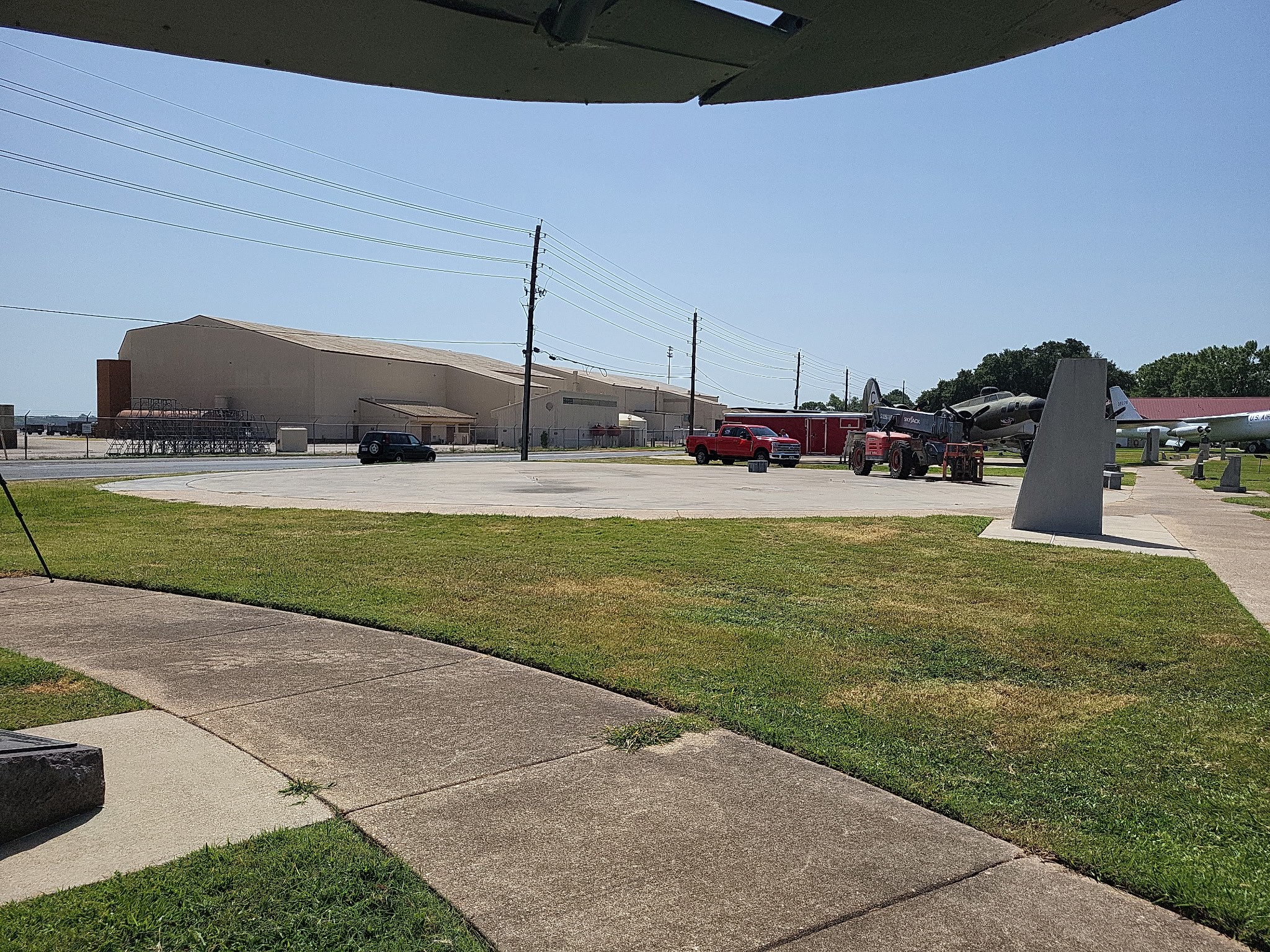
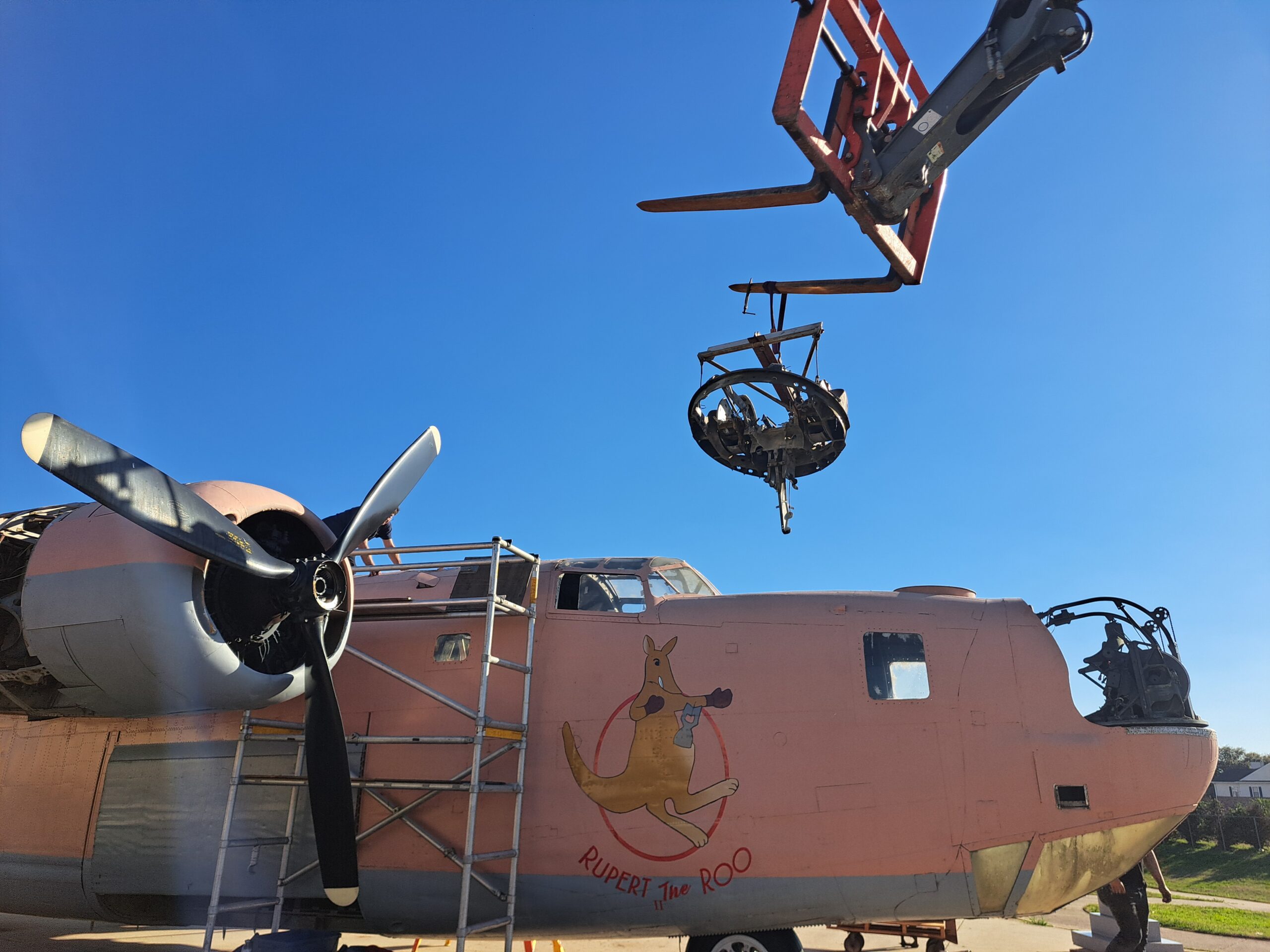
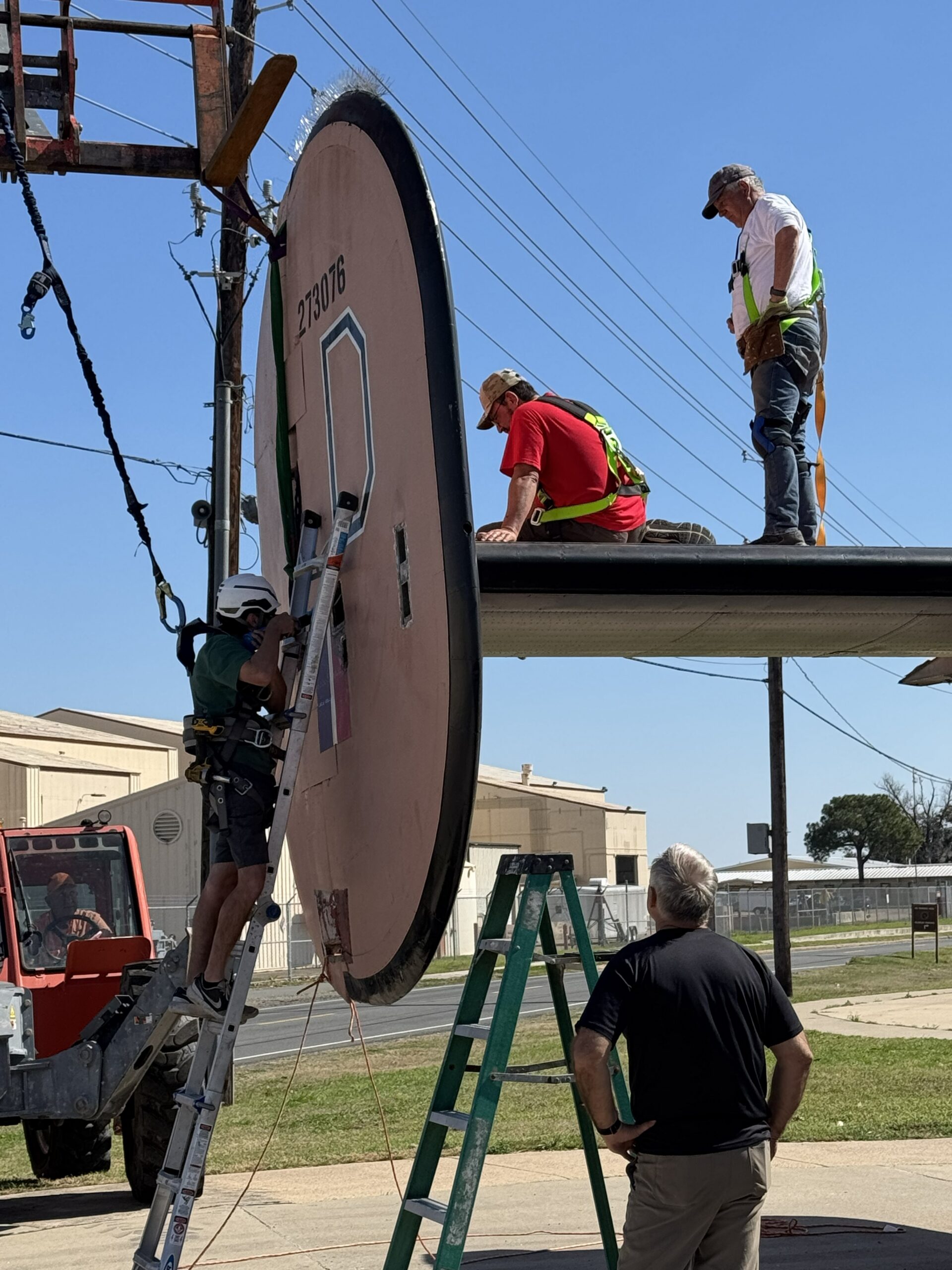
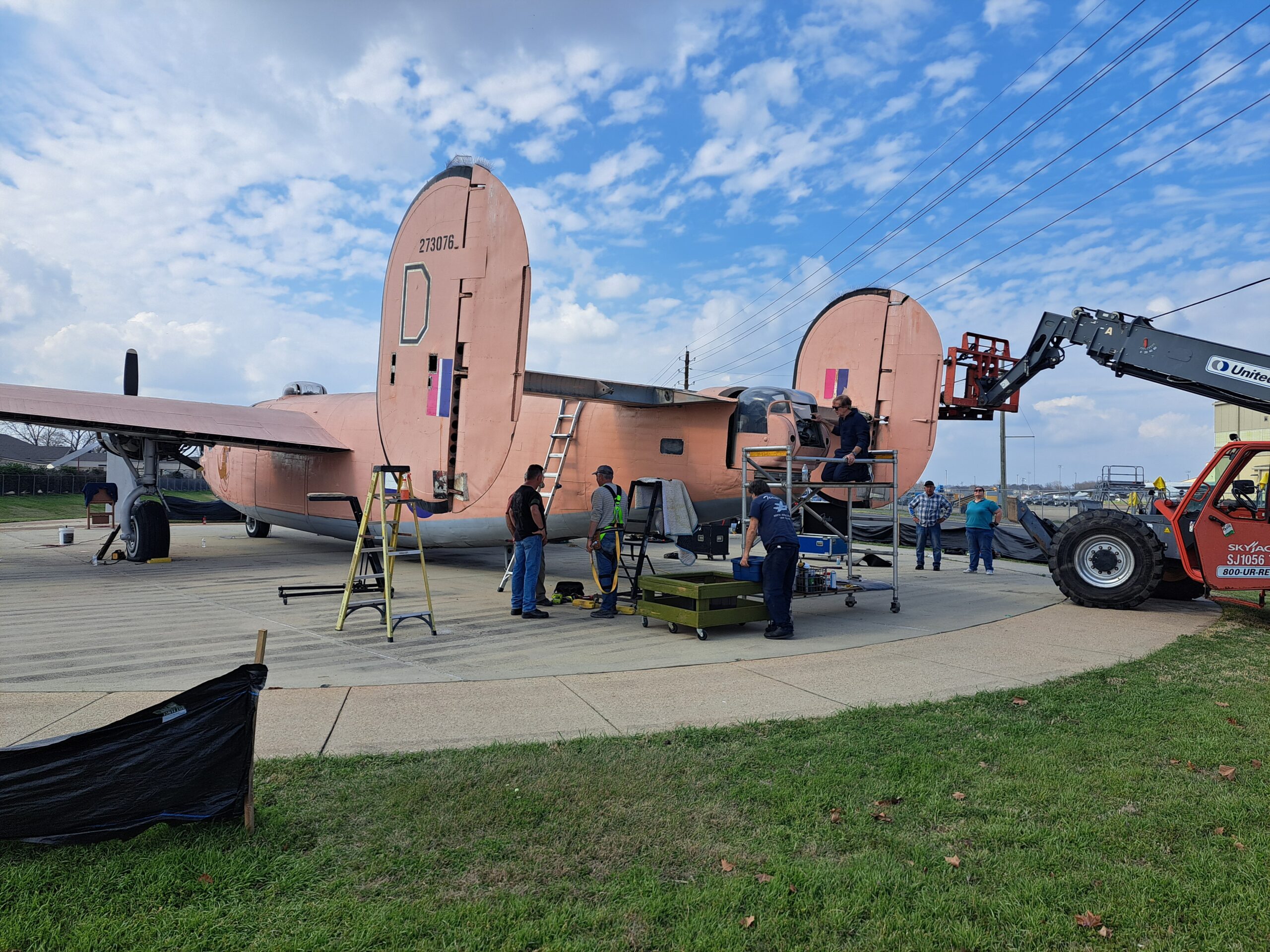
Forward fuselage separation. Main wing assembly separated from fuselage. Main wing assembly separated from fuselage. Phase II completed: Empty hardstand at Barksdale Air Force Base. Left Aileron disassembly Working on an engine Top turret extraction Preparations for removing right vertical stabilizer Preparations for removal of the turret from the tail gunner position Removal of right elevator of the horizontal stabilizer B-24 propellers prepped for transport to restoration facility. B-24 engines post cleaning
Scroll or swipe to view more photographs.
Photography Credits: National Museum of the Mighty Eighth Air Force, National Museum of the United States Air Force, Barksdale Air Force Base, and additional contributors. Images remain the property of their respective owners and are used with permission and credit where applicable.
Video Credit: Airman 1st Class Preston Crawford, U.S. Air Force. Videos remain the property of their respective owners and are used with permission and credit where applicable.
General History of the B-24
Consolidated Liberator
The B-24 Liberator
The Consolidated B-24 Liberator was one of the most influential aircraft of World War II and remains the most-produced American military aircraft in history. Designed for long-range missions and heavy bomb loads, the Liberator served in every major theater of the war, supporting Allied operations through strategic bombing, maritime patrol, cargo transport, and reconnaissance.
For the Eighth Air Force, the B-24 played a vital role in the daylight bombing campaign over occupied Europe. Today, the National Museum of the Mighty Eighth Air Force is preserving that history through the restoration of a historic B-24 Liberator, ensuring future generations can learn about the aircraft, the airmen who flew it, and the impact they had on the course of history.
The B-24 Story
When the U.S. Army Air Corps sought a bomber with greater speed, range, and payload to meet the demands of a changing world, Consolidated Aircraft answered with the B-24 Liberator. First flown in 1939, the aircraft introduced innovative features including its distinctive high-mounted Davis wing, twin-tail design, and tricycle landing gear, giving it exceptional range and versatility for missions across the globe.
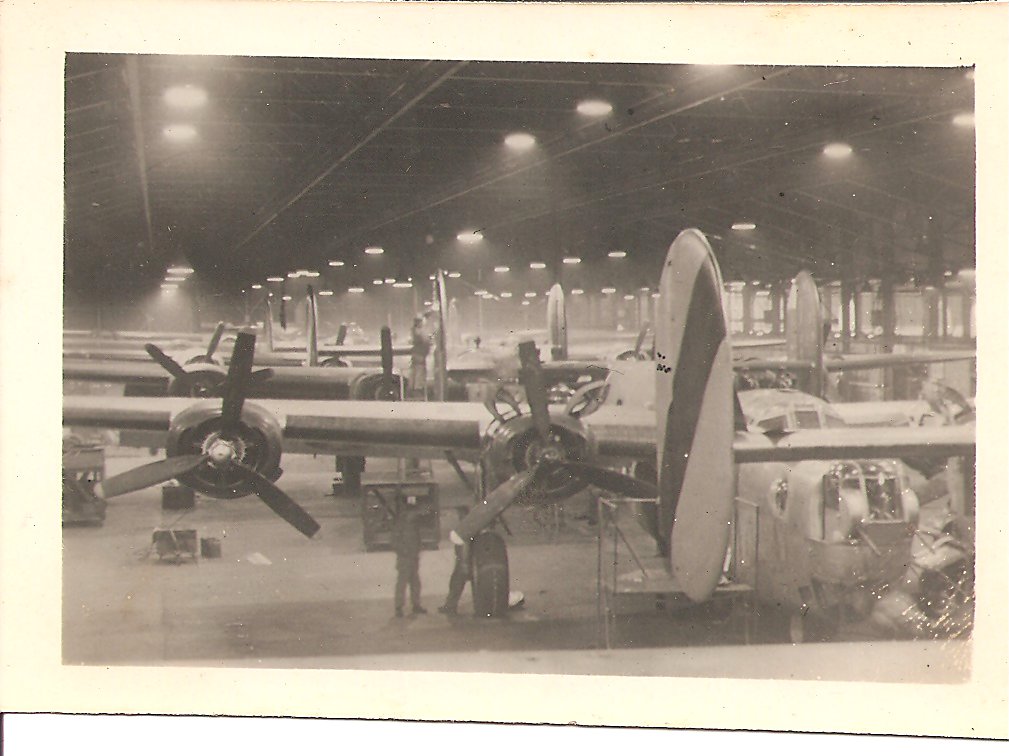
As America’s role in World War II expanded, so did the demand for the Liberator. More than 18,000 B-24’s were produced between 1940 and 1945, making it the most-produced American military aircraft in history. Built at five manufacturing plants across the United States, including the legendary Willow Run facility in Michigan, the B-24 became a powerful symbol of American industry and the nation’s ability to support Allied forces on an unprecedented scale.
The Liberator in Combat
The B-24 Liberator served in every major theater of World War II, earning a reputation as one of the Allies’ most versatile aircraft. Its exceptional range and heavy payload allowed crews to conduct strategic bombing missions, anti-submarine patrols, cargo transport, aerial reconnaissance, and special operations from Europe and North Africa to the Pacific and China-Burma-India theaters.
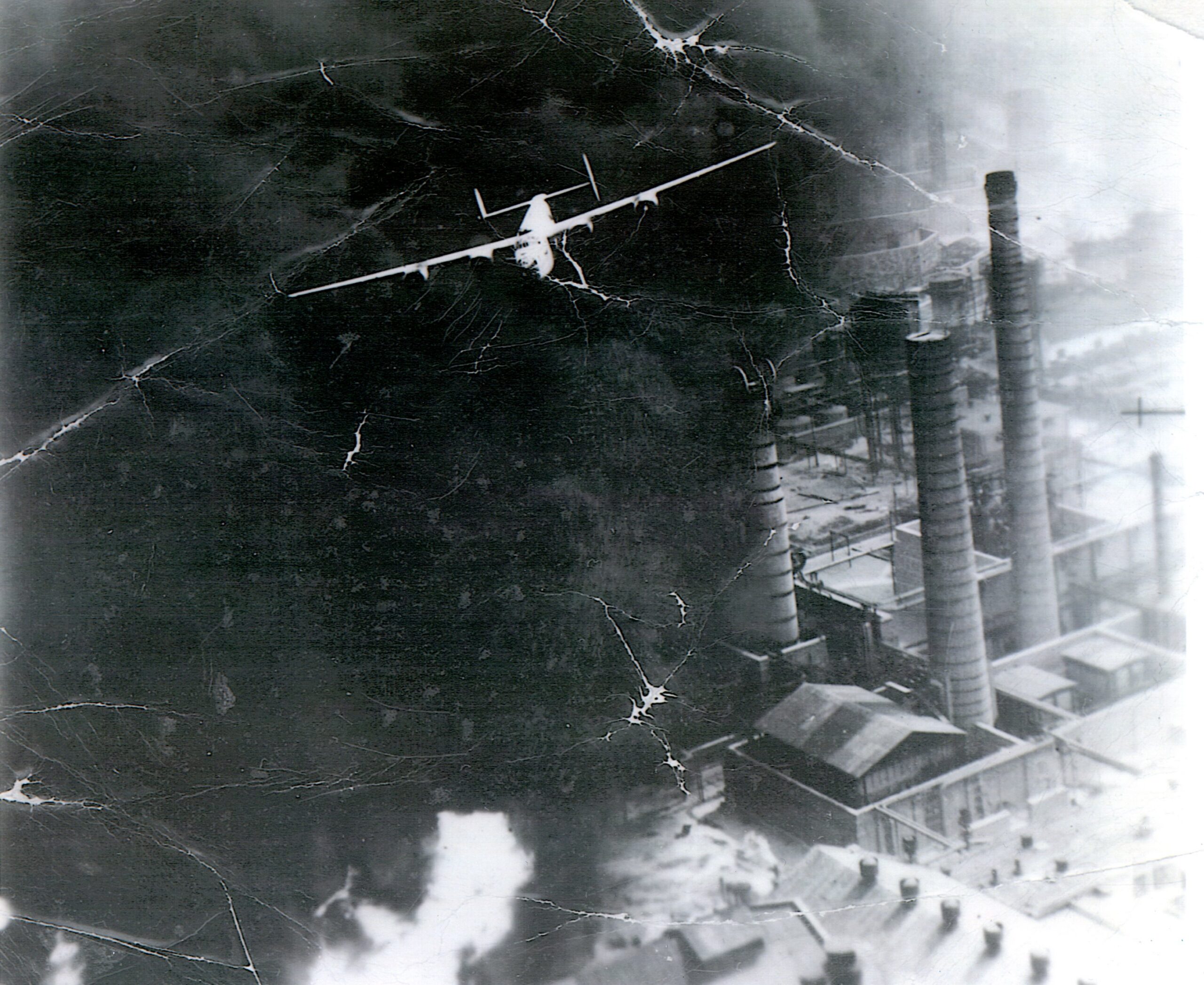
Within the Eighth Air Force, the B-24 was flown by the Second Air Division, whose crews carried out daylight strategic bombing missions from airfields across East Anglia, England. Flying deep into occupied Europe, Liberator crews targeted aircraft factories, oil facilities, transportation networks, and other strategic objectives while facing enemy fighters, anti-aircraft fire, and unpredictable weather. Their courage and determination played a critical role in weakening Germany’s war-making capability and advancing the Allied victory in Europe.